Innovating respiratory therapy for your patients
Stable saturation even during activity
The Oxygen Paradox
Oxygen therapy saves millions of lives, but for many people it fails precisely when they need it most-representing a paradox.
The content of this video is for illustrative purposes only.
The Atmosphere in a Box
The patient controls the flow according to their actual demand. Oxygen delivery aligns with human physiology.
The content of this video is for illustrative purposes only.
Micro-Atmósfera
What matters is not the amount of oxygen administered, but that the patient maintains adequate oxygenation during movement.
The content of this video is for illustrative purposes only.
CLINICAL STUDIES
OXFO Power
Study with patients at rest
Study Design
UDEA , Hospital Alma Mater de Antioquia, Colombia
- Single-visit, randomized, and crossover study design.
- 20 stable, hospitalized, and oxygen-dependent subjects (≥ 2 L/min), randomly assigned to receive either the OXFO Condition or the Standard Condition first.
- Subjects were administered oxygen for 20 minutes during each condition.
- Volume was measured every 5 minutes and SpO2 every minute.
- 1 subject was excluded from the analyses due to a protocol deviation.
Results: Oxygen Savings
Randomized, crossover study.
20 pacientes hospitalizados estables (Uno excluido)
- Age range 43-70
The prescribed supplemental O2 dose at the time of selection was 2-5 L/min
Results: Saturation
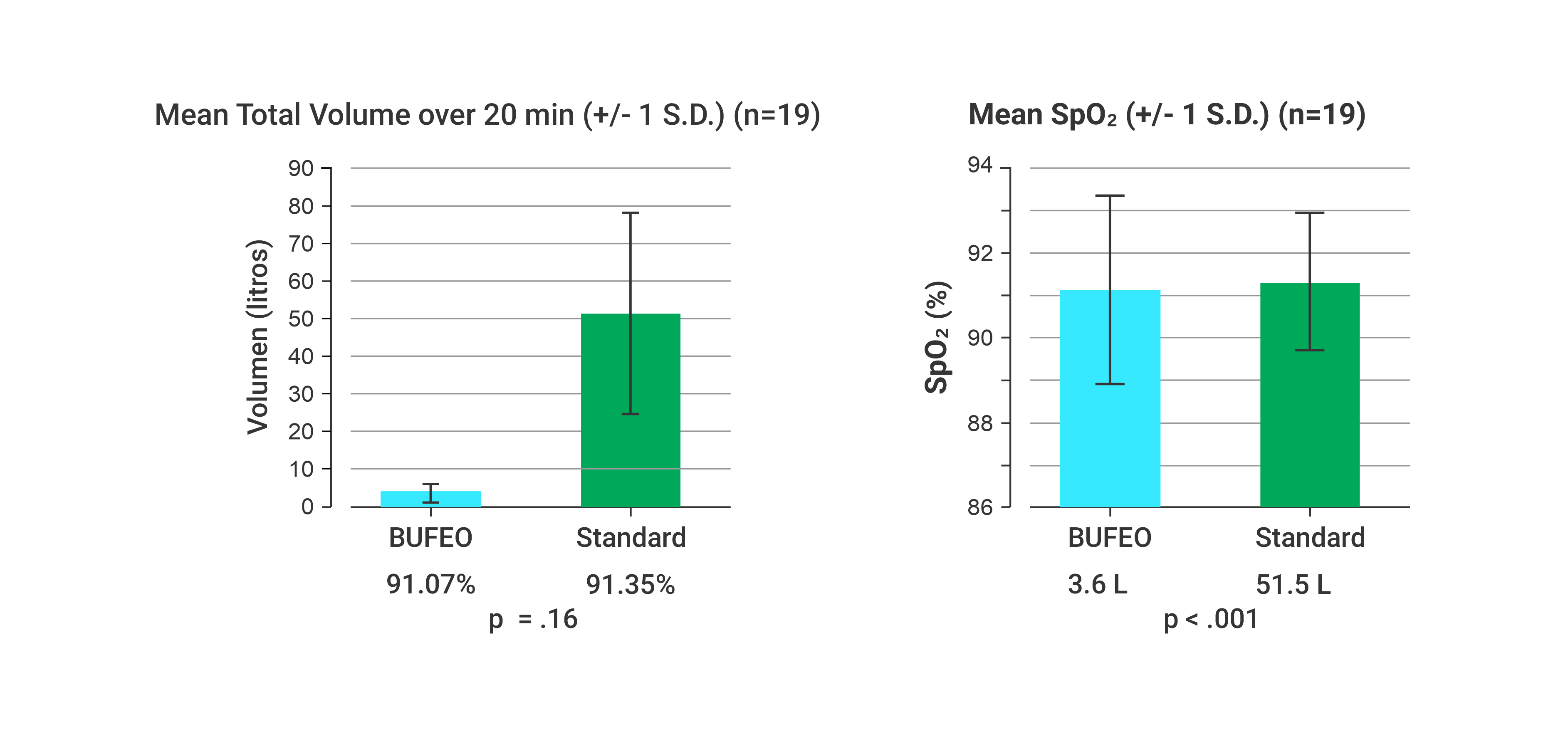
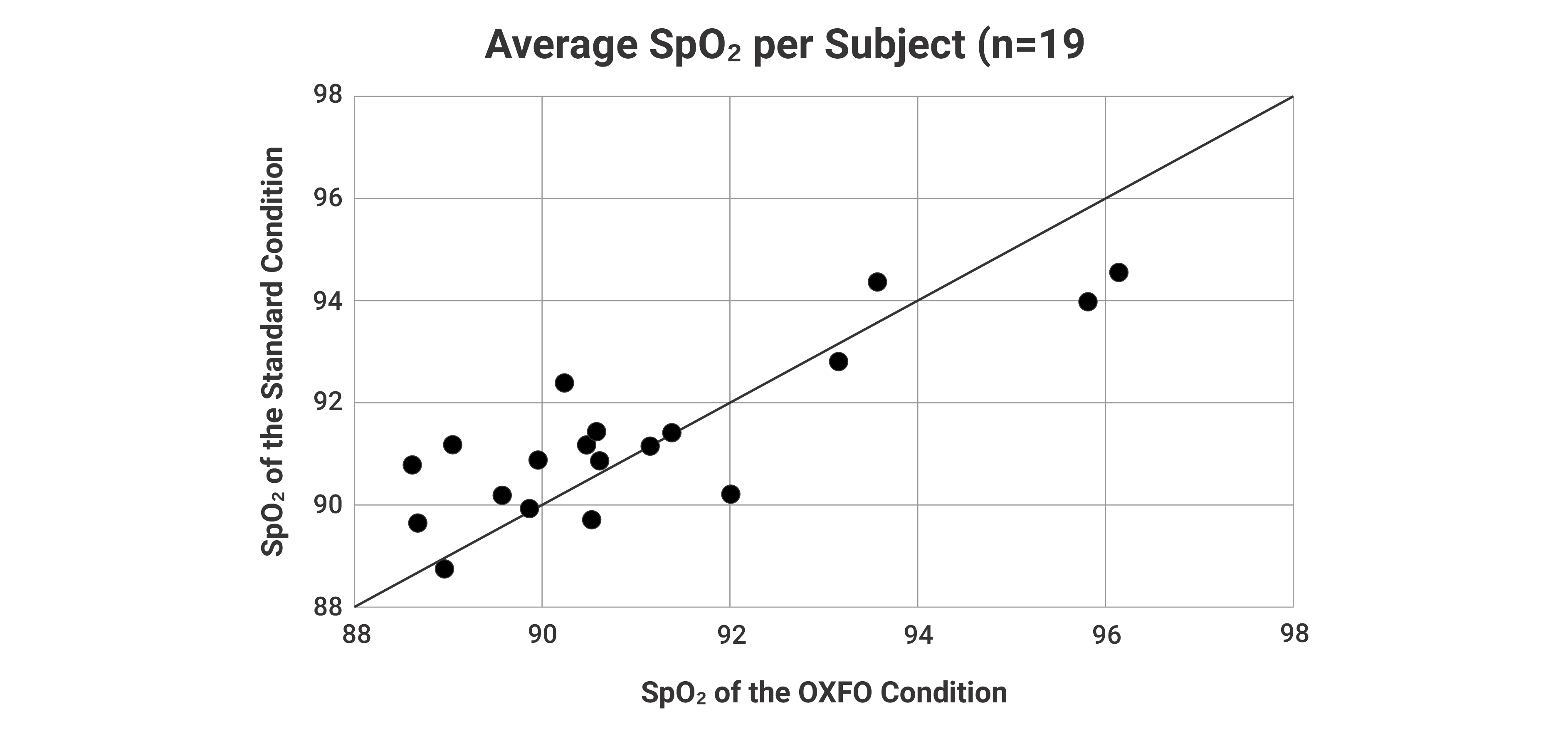
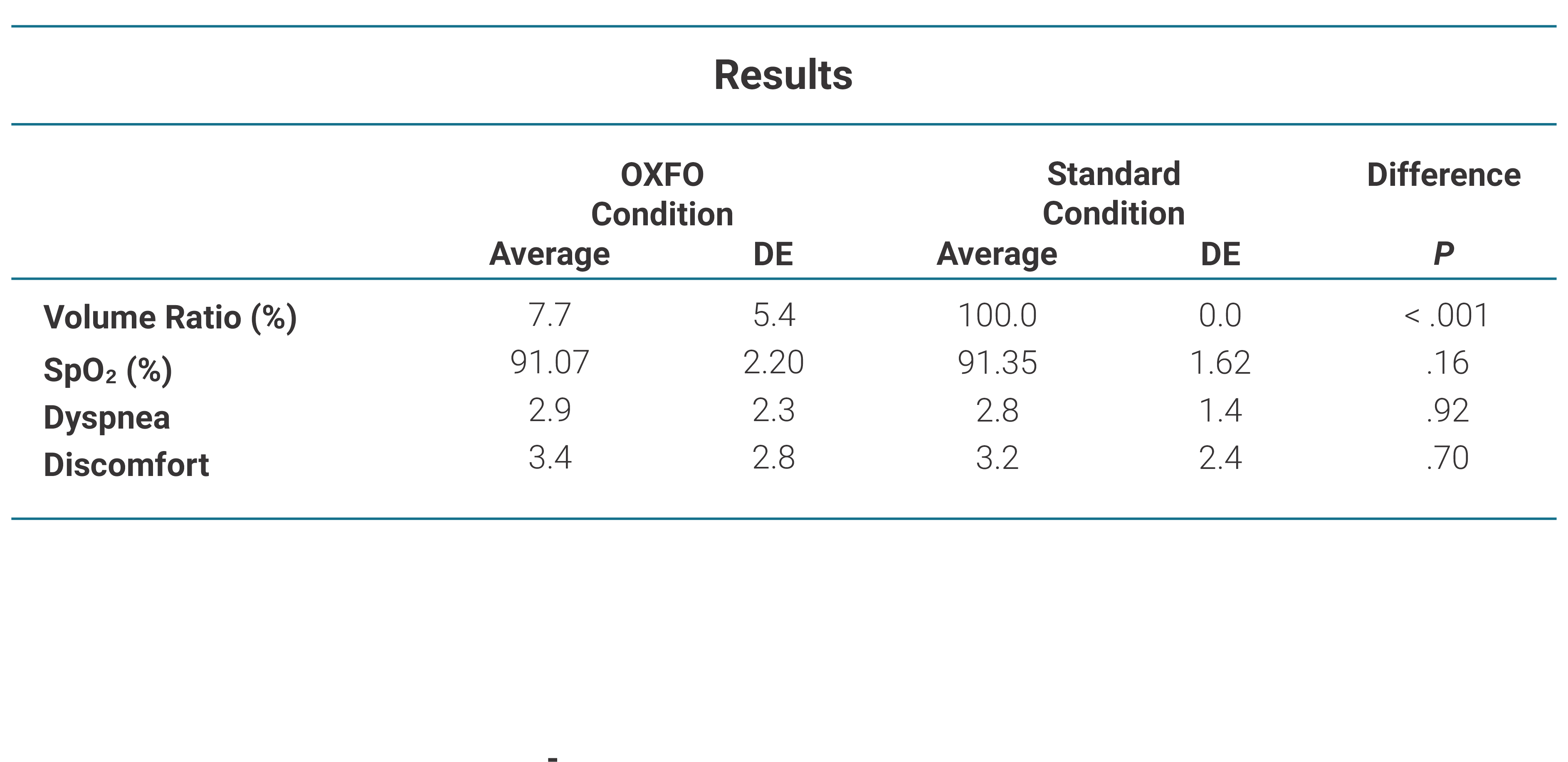
The average SpO2 for the OXFO Condition was 91.07% (SD=2.20%), compared to 91.35% (SD=1.62%) for the Standard Condition. The difference was not significant (p= 0.16).
The non-inferiority test of the OXFO Condition was significant (p<0.001).
Results: Volume
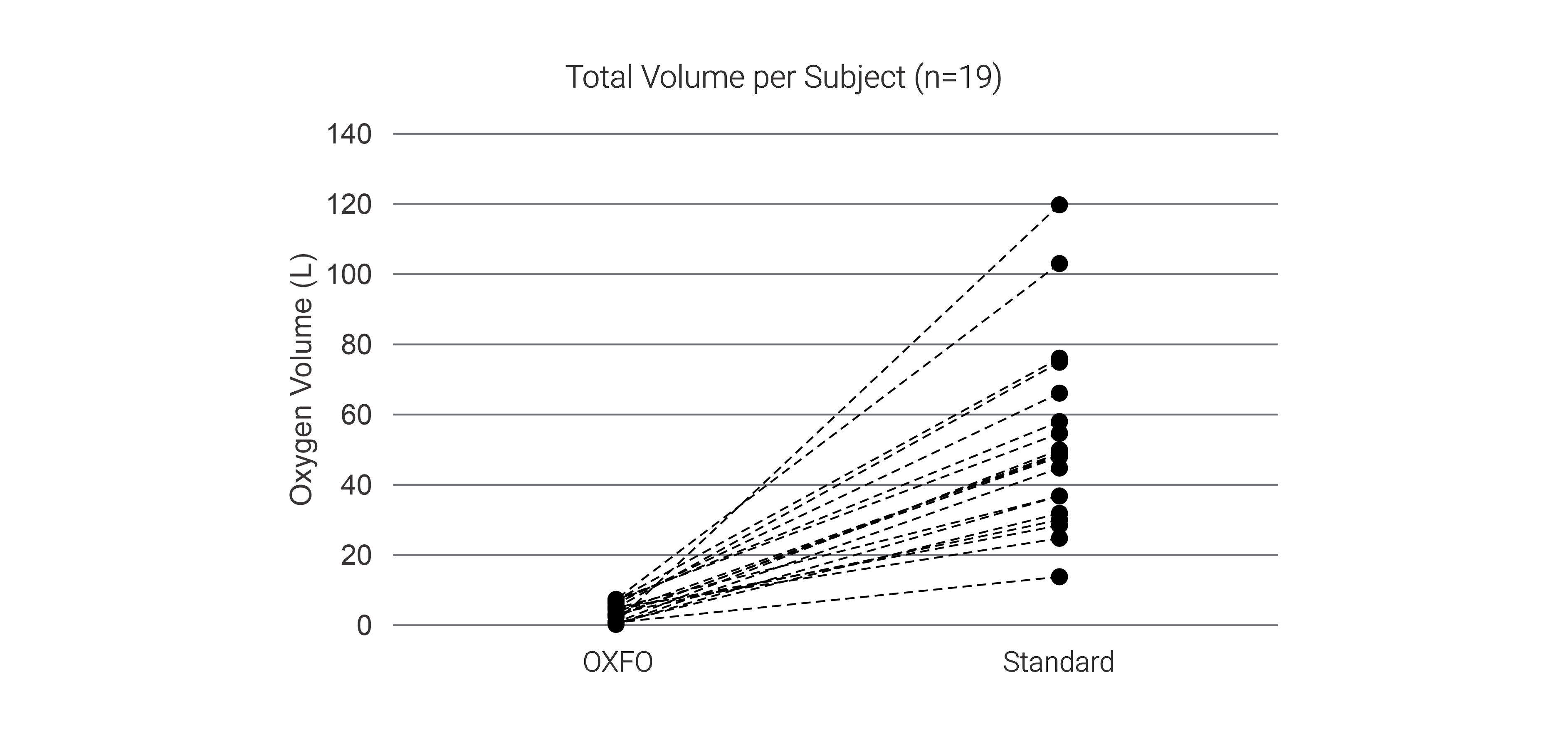
The OXFO Condition dispensed an average total of 3.6 L (SD=2.5 L) compared to 51.5 L (SD=27.0 L) during the Standard Condition (p<.001).
The OXFO Condition dispensed only 7.7% (SD=5.4%) of the total volume dispensed in the Standard Condition, representing a 92.3% conservation.
Results
The OXFO condition saved a significant amount of oxygen while achieving similar saturation levels.
Subjects tolerated the OXFO System as well as the standard treatment.
There were no adverse events, and all subjects completed the study.
OXFO RBS
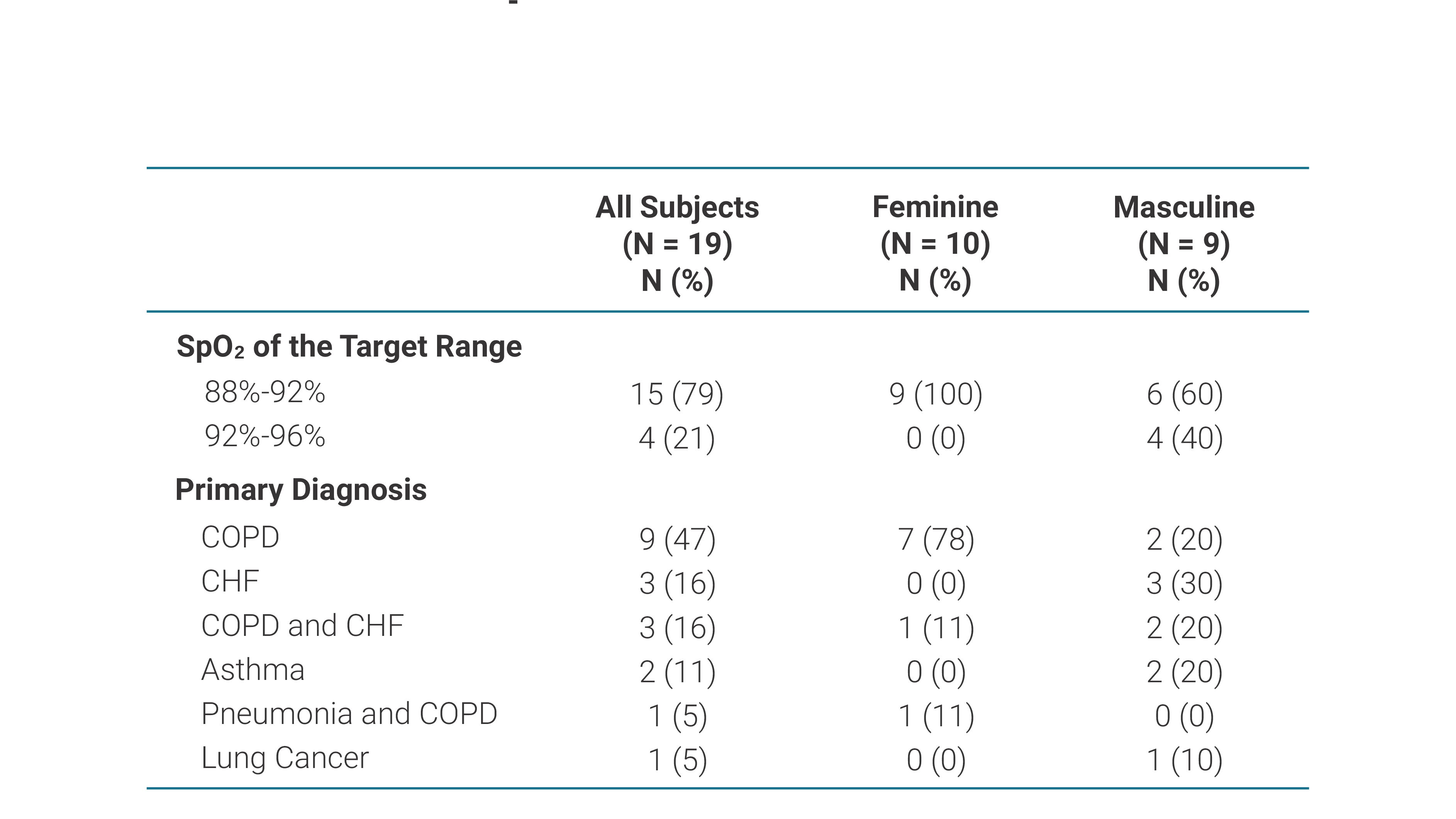
Study with patients in motion
Field test of the OXFO RBS with patients using a stationary concentrator.
Country: Colombia
Date: October 2025
Objective: Evaluate the ability of the OXFO RBS system to maintain oxygen saturation ≥ 88% during patient ambulation, compared with a 5 L stationary concentrator alone.
American Thoracic Society Annual Meeting 2026, Orlando, Florida.
When oxygen concentrators become insufficient during ambulation: a feasibility study of OXFO-RBS to increase the performance of a 5 L/min concentrator and restore adequate oxygen saturation.
The content of this video is for illustrative purposes only.
C F Bazoberry, K M Wawrzyniak, B24-16 When Oxygen Concentrators Fall Short During Ambulation: A Feasibility Study of OXFO-RBS in Augmenting 5l/min Concentrator Performance to Restore Adequate Saturation, American Journal of Respiratory and Critical Care Medicine, Volume 212, Issue Supplement_1, May 2026, aamag162.1775, https://doi.org/10.1093/ajrccm/aamag162.1775
Benefits for Patients
Natural Oxygen Dosage:
With OXFO, the patient controls the oxygen flow they need according to their inspiratory flow, aligned with their physical activity. This maximizes oxygen efficiency and duration, eliminates waste, and maintains proper oxygenation levels.
Potential Quality of Life Benefits:
Patients who have used the OXFO device have reported a significant improvement in their quality of life, enjoying greater freedom and ability to engage in physical activities. This not only positively impacts their mental and physical health but also enhances their social and economic well-being, benefiting both the patient and their family.
Portable Design
OXFO is compact, lightweight, weighing just over 1 pound, and easy to carry, providing the patient with greater autonomy and comfort.
Safety and Reliability:
OXFO is made from medical-grade materials, making it ideal for use in any respiratory therapy setting.
It is a Class IIA device, certified by INVIMA in Colombia, with additional medical registrations and scientific support through clinical studies.
Clinical Evidence of Failure in Conventional Oxygen Therapy Devices
Current systems based on fixed or pulsed flow are unable to adapt to the patient’s variable inspiratory demand, especially during exercise.
Subscribe to our newsletter
Join our community of healthcare professionals! Sign up to receive updates on OXFO, respiratory therapy developments and continuing education opportunities